Get Active: volunteer, experience, connect with the natural world

 
Get Active: volunteer, experience, connect with the natural world and put animal magic into your life! 

 RSS Feed

  1.  

    Did you see the Yorkshire Vet on Channel 5 tonight (the 30th April 2024)?  

    On the programme, there were some amazing dogs giving blood - so I thought it would be helpful if I put up a quick blog about the Pet Blood Bank with a link.

    The dogs giving blood can really save the lives of dogs in need, just as people can with the human blood bank.   You can find out more here - the Pet Blood Bank has lots of information on its site for dog owners and they are working on a pet blood service for cats. 

    This is Yogi the blood donor.  He's a Doberman, and so far this very special dog has saved the lives of up to 60 dogs by giving blood.  Pet Blorod Bank say that every unit of blood can save up to 4 lives. 


    The criteria for whether your dog can give blood is here.

    A huge thank you to the vets and the programme for raising awareness of the chance pet owners have got to take their pets to give blood, if they can.  And to the dogs for being so brave and their owners for volunteering their dogs. 

    Visit the Pet Blood Bank here.

  2.  

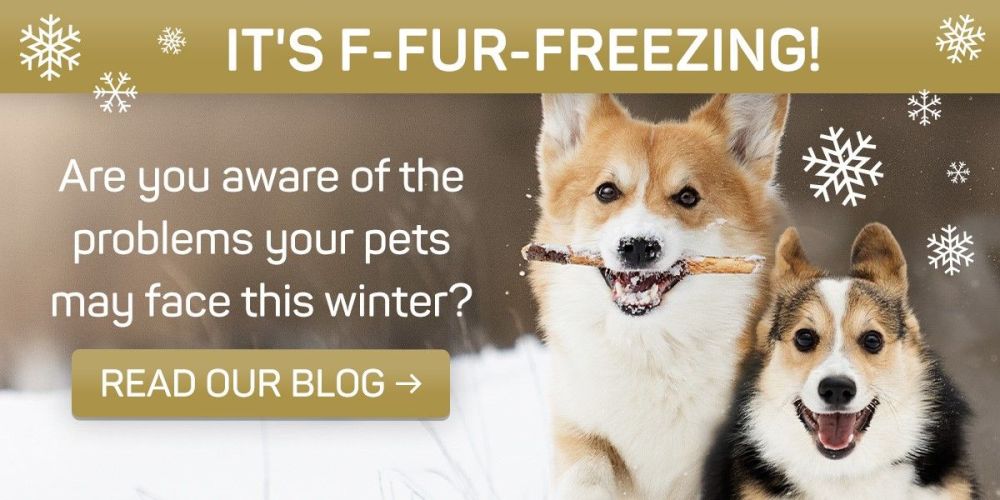
    Brrrr!  Now it’s getting very much colder, we need to look out for our furry friends and other animals!

    Viovet have put a blog together full of advice on how to care for your pets, dogs particularly, and the blog cover things like skin, the loss of body heat, snow in your dog’s fur, arthritis and osteoarthritis in dogs, snow and ice dangers, salt and chemicals.  There are lots of tips on how to keep your dog warm and dry and visible to keep them safe, too.

     See what advice Viovet has for care of your pets (mostly dogs) in the freezing weather

    When we go outside, it can be quite a shock to the system.  Viovet points out that our fingers, ears, noses and toes can suffer the worst of the cold.  Our pets need extra care too.

    Take a look at the blog hereViovet has lots of great special offers, too for dogs, cats, horses, small pets, and you.

    The RSPCA also has seasonal advice for pets, livestock and wildlife - click here to find out more! 

  3.  

    Online pet retailer Viovet  have lots of offers for dogs, cats, horses and small pets.   They've got prescription and non-prescription medications, food, toys and equipment and they have many leading market brands,and their own-branded products and supplements. We've used Viovet, and found them to be great!  

    Viovet have dog toys, bowls, dishes, feeders, placemats, dog bdding, dog treats and dental.

     The Felix Goody Bag Treats Original Mix is on offer
    The Felix Goody Bag Treats Original Mix is on offer 
    until 31.12.23

    They've got everything for your cat as well - toys, food, bedding, dental, worming, cat litter, toilets, scratching posts, water fountains, creates, carriers and food and treats.

    Small pets are catered for too!  Chinchillas, guinea pigs, rabbits, hamsters, mice, rats, gerbils and ferrets... there's food, bedding, catch and hutch cleaners, grooming and toys. 

    Lily's Kitchen Festive Christmas Turkey Jerky for Dogs 

    Lily's Kitchen Festive Christmas Turkey Jerky for Dogs
    is also on offer until 31 Dec 2023.

    And if you've got a horse or pony, take a look at the range for both horses and riders.  

    Viovet also have prescription medicine and it can be so much cheaper to get this online rather than directly from your vet.  

    Head off to Viovet here to find out more.


  4.  

    Will you sign the Big Shark Pledge with the Shark Trust?

    The Shark Trust say that many of our best known sharks make their home on the high seas, beyond any national borders. 

    But these sharks and rays are threatened by an enormous international fleet of fishing vessels.  

    Back in early 2021, research was published which confirmed that over 75% of oceanic sharks and rays are at risk of extinction because of the impact of overfishing. 


    So will you add your voice to the Big Shark Pledge and put pressure on governments and fisheries Will you help make the changes that these sharks need humans to make to keep them safe?

    The Shark Trust says that this will be a long term, international effort which will demand collaboration.   It will be important to put science at the heart of shark conservation and fisheries management. 

    The Shark Trust asks us all to sign their pledge now and agree to (and I quote):

    S – Stand up for shark conservation

    H – Have faith that change will happen

    A – Act when called upon

    R – React to and share our campaign

    K – Know that I’m making a difference

    Together we can call for stronger conservation and fisheries management.

     #BigSharkPledge

    Please sign the Big Shark Pledge here.


  5. There’s great mews from The Times for cat owners and lovers!

    On Monday 3rd July 2023, reporter Kieran Gair (thank you, Kieran!) reported that the first feline blood bank in the UK to provide treatment for cats with medical conditions is to be set up by Banco de Sangue Animal.

    They are a Portuguese group, and they already have animal blood banks in Portugal, Spain and Belgium. 

    Like us, cats must be transfused with a matching type of blood, but they just have two blood types, namely A and B. 

    Cats are prone to blood born disease, and there’s been a problem for cats because there hasn’t been appropriate blood available. 

    If you think your cat would be a suitable donor, you can register him or her on the Pet Blood Bank UK’s website.

    Pets need blood donors too!
    Pets need blood donors too!
    Visit the Pet Blood Bank UK here.

    If you think your cat could be a blood donor, he or she needs to be a large, healthy cat who likes being handled and who likes spending time with people.  And he or she should be between 1 and 10 years old, and weight no more than 9 pounds.  They also must be up to date with vaccinations and treatments. 

    It takes about 10 to 15 minutes to do a cat blood donation – on average – but the whole process takes 4 hours, since the vet needs to make sure the cat is properly hydrated before they head home.

    The Times say that the Royal Veterinary College stores feline blood but only for the animals treated at or referred to it, since it is a transfusion service as opposed to be a blood bank.

    Visit the Pet Blood Bank UK here.  

    PS Their own recent news is that they are working with Blood Bikes 4 Pets – this is a new, soon to be charity, and it’s working to create the UK’s first professional motorbike blood delivery service for pets!    They service will operate with volunteer riders who can safely take blood products across the country on specialist bikes.  A big thank you to Honda who are helping.  Visit Blood Bikes 4 Pets here – you can donate the cost of fuel to help!  We wish them God speed and all the best 

    PPS The Pet Food Blood Bank UK  also need blood from dogs….. fetch more information here.  

    And they are supporting the alpaca community by offering a collection kit and blood processing service for alpaca vets.  Find out more


  6.  

    Prevention is better than cure, so they say, and those lovely people at online pet store Viovet have come up with 4 simple steps to a healthy lifestyle for your pets.  Actually, reading them, they could equally apply to people as well.

    There are lots of ways you can help your beloved pets keep well and fit – feeding them the right food, for a start e.g. if you want to give your dog a chocolate treat, make sure the chocolate is made for dogs and not chocolate that you and I would eat.  Chocolate for humans can be lethal for dogs, and pet food makers have come up with chocolate treats for dogs. 

    Find out more about Viovet's  healthy lifestyle in 4 easy steps
    Find out more about Viovet's  healthy lifestyle in 4 easy steps

    Viovet’s four steps to a healthy lifestyle are as follows – you can get more information from their website, as they cover questions such as how much exercise does your dog need, what sort of diet is best, there’s information on raw feeding,

    Get active

    Regular walkies for you and your woof will help you both with your weight, getting out and about, and mental health as you meet fellow dog walkers and of course everyone wants to say hallo when you’ve got a pooch on the end of a lead.   Please respect the countryside and keep dogs on leads if around livestock and wildlife, however well behaved your dog is.  It’s also very helpful to continue your dog’s training when you’re out and about – we used to train ours in the middle of fields, in the woods – we were both exhausted when we got home!

    Diet

    As I type this, I’m tucking into my morning coffee and a gorgeous shortbread biscuit (shall I have another one? My jeans are suggesting it wouldn’t be a good idea… Everything in moderation…)

    Please make sure your pets, livestock and wildlife have plenty of fresh water available to them – this means cleaning out water bowls and baths regularly.  Vet advice is always helpful, but Viovet have plenty of pointers on their blog about decoding your dog’s diet, choosing the right commercial diet and looking at raw feeding.

    Race off to Viovet to fetch more advice on keeping your pets healthy

    Tackling anxiety and stress

    Some pets get more anxious than others, and lockdown hasn’t helped if your dog is staying at home and you are now back at the office.  Viovet has some tips on how to help with separation anxiety such as leaving the radio on. Start going out without them for short periods of time so that they get used to it. 

    Get regular check-ups

    At the moment with so many of us finding things really tight financially, vet visits may be the last thing you want to do, but please keep up to date with vaccinations and checks – a problem spotted and dealt with earlier can be far less costly to deal with than leaving it in the hope it will go away.  Grooming your pet regularly will help you get used to feeling for anything unusual that crops up e.g. any lumps and bumps that are new and will need you to keep an eye on them. 

    The Pet Food Manufacturers Association have a way you can check if pets are overweight – keeping their weight at the right amount will help keep your pet healthy.

    Viovet have lots of ways they can help you, and there’s plenty of advice on all sorts of pet related health issues.  Don’t forget the PDSA and Blue Cross have help for people who meet their criteria for free or subsidised vet care.


  7.  

    The Canal and River Trust look after our canals and rivers (with lots of help from volunteers, in case you’re looking for something to do in your spare time, which makes a difference).

    And they have launched a #PlasticsChallenge.

    They say if everyone took their litter home with them and picked up even just ONE piece of plastic every time they visited, our canals and rivers could be free of litter within one year!

    The Trust does an amazing job looking after the canals and rivers – but nonetheless, these beautiful places are in danger from mindless pollution!

    Water birds make nests from pieces of plastics.   Aquatic invertebrates ingest plastic – and that means that small fish ingest them too, as they are higher up the food chain.

    So everyone needs to get involved and pick up litter.  Every year, about 14 million pieces of plastic end up in our canals and rivers.  We need to reduce the plastics in these places.

    The Canal and River Trust has advice on doing this safely and makes it very clear that you should NOT go into the water to collect plastic out.

    Don’t let litter mean it’s over for wildlife.  Please pick up litter or share the information about the campaign!   

    Please pledge your support for this #PlasticChallenge.


  8.  


    If you love nature and wildlife, and want to discover more about wetlands in particular, please take a stroll around the Wildfowl and Wetlands Trust’s website and especially their Discover Wetlands pages.

    The Wildfowl and Wetlands Trust (WWT) is the UK’s leading wetland conservation charity.  And they are working "to create a world where healthy wetland nature thrives and enriches lives."

    There’s lots to discover and learn about wetlands from their website and there are things to do, for all the family – and this is a great chance to boost your knowledge about vital wetlands and what they are and why they are so very important.  Sadly, they are often overlooked and seen as “wasteland” but they are critical for both wildlife and people and the good of us all.

    Amongst the  things to do, you’ll find a series of Make it videos.  They are all short in length and easy to follow, and they give you lots of ways to encourage wildlife to your garden so that you can help all garden wildlife. 

    Make it with help from the WWT
    Make it with help from the WWT - they have got some great videos to help you!

    The WWV videos show you how to make things such as...

    • A mini pond
    • A toad hall
    • A LEGO bird table
    • A bird feeder
    • Yoru own binoculars
    • A bird hide
    • A water cycle in a jar
    • Your own t-shirt bag
    • An upcycled bird feeder
    • A bug hotel
    • Eggy cress aniamls
    • A nature star

    They all come with an activity sheet in PDF format that you can download, too

    The Discovery Wetlands pages also have quizzes you can do plus for teachers and parents (or I presume anyone who would like to do it), there’s a 12 week home-learning programme with everything you need to teach key science and geography topics at home!

    Don’t forget that the WWT has a number of different wetland centres you can visit around the UK – you can find the one closest to you here.

    Help our wetlands!  They need your support

    Please, please may I urge you to respond to WWT's call to give the creations of wetlands our support? Wetlands Can is asking for all our support (signatures) for the creation of 100,000 hectares of healthy wetlands – including in urban areas – to help fight today’s wellbeing, climate and nature crises.

    Please pledge your support today for wetlands here

    Find out more about Wetlands Can here

    Pledge your support for Wetlands Can here

    Images on this blog entry ©WWT


  9.  

    We have done lots of things to encourage wildlife into our garden in the last few years and we've been rewarded with lots of different species of birds.   We've also had a frog or two, and bees and butterflies, dragonflies and a couple of hedgehogs.  

    Our neighbour is very good with identifying different types of birds and says he's spotted over 60 species of our feathered friends in the neighbourhood which is really good to hear.


    Rewild your garden with tips from Springwatch
    Rewild your garden with tips from Springwatch

    So far, in our garden we've....

    • Put up a log pile (or more accurately, we've put a pile of logs in a quiet corner which the insects seem to like
    • Put out a hedgehog house with a water bowl (also in a quiet corner so that the hedgehogs can have some peace)
    • Stuck up a little bee house and a butterfly hotel
    • Planted lots of flowers for wildlife - ones the bees and butterflies will LOVE!
    • Put out two or three bird feeders
    • Dug out a very small wildlife pond which we did in lockdown.  
    • Let our garden overgrow in some parts and let the lawn grow, grow, grow

    We love looking out of the window to see who is in the garden paying a visit and I'm sure there's more we can do to encourage the wildlife.  

    The Erysimum 'Bowles's Mauve' is great for pollinators

    Top 10 patio plants for bees

    If you're looking for hints and tips, and ways to get started, a great place to start is the RHS website.  They have a particular section of the site for wildlife gardening and however much you have done already or want to do, there could be something there to spark off an idea or an activity.

    Head off here to see their section on Wildlife Gardening.  Take it a step at a time;  it's the sort of thing you could do a step a month.

    By the way, you could do something as simple as pot a plant for pollinators - just get a pot and stick some bee and/or butterfly friendly flowers in it.  All you need is the pot, soil, compost (and you can make your own) the seeds and a small space, so it's very easy to do.


  10. Want to make a difference to wildlife?

    One way to do this is to take part in surveys.   They give conservation charities a really good idea of what is happening across the country – so the more people who join in the better.  You don’t need to be an expert, just to take part.

    Building up a picture of wildlife on our doorsteps help us tell if a species is in trouble and needs help.   For example, thousands of wildlife watchers have helped identify the loss of hedgehogs over 20 years.  Like the RSPB’s Big Garden Birdwatch, which has run for over 40 years now, surveys give a lot of local information which give great value to wildlife conservation because of the picture they build up.

    It’s time for the PTES Living with Mammals Survey!

    The 29th March 2021 saw the launch of this year’s Living With Mammals survey.  All you need to do is to record the mammals you see every week and any signs they leave behind, such as footprints or droppings.

    Spotting wild mammals, a PDF from the PTES
    Spotting wild mammals, a PDF from the PTES
    image © PTES

    You can choose any green space to survey.

    It could be a garden, an allotment, a local park or any other area that’s convenient to spend a little time in each week.   The site must be within 200 metres of a building.

    You can share your photos online using #LivingwithMammals

    PTES who run the survey aren’t asking people to survey public areas, but to survey in gardens and other private land.  If you’re not sure about whether to take part in surveys during COVID-19, check government guidelines and then decide if it is right and proper and safe for you to take part.

    Register here (it’s free to do this and there’s the most gorgeous picture of a fox waiting for you)

    Survey tips and hints are here such as when and where to look, tracking signs so you can work out who is who, a note on wildlife cameras and more.   Mammals are typically more active at sunrise and suntset.   Check walls, hedges, fences, grass verges and field margins – they all provide cover for mammals.

    There are mammal fact files here.   Doing a survey is a great way to find out more about wildlife!

    You can see the results of past surveys here – Living with Mammals started in 2003!

    Visit the PTES website for more information


    Give local wildlife their own wildlife corridors

    PTES point out that connecting our gardens and patches of green such as grass verges and local parks enable animals to move between different features.  Make a CD sized hole in the bottom of a fence can really help them journey from one place to another – their own sort of motorway network, a wildlife corridor, if you like.  These can certainly help animals such as hedgehogs.   Visit Hedgehog Street, a campaign run by PTES and the British Hedgehog Preservation Society for more information..