.

Welcome! Thank you for coming to visit
Get Active
with Animals

Donkey Magic Works Wonders to bring Joy to the Elderly

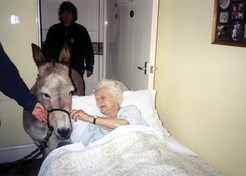
Picture the scene:  you are in a residential home, sitting in your room. There is movement in the corridor, a quiet knock at the door – and a small donkey walks in to see you.   

He is not alone. Two smiling helpers from the Elisabeth Svendsen Trust are with him, one at his head, one at his bottom end. You break into a smile from ear to ear, then a wonderful laugh, and spend a priceless few minutes, talking to them and to the donkey.  


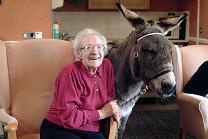
The donkeys visiting the elderly bring great joy and love

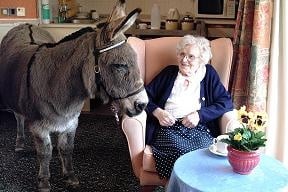
You relish the warmth of his breath as he breathes gently on you. You never thought you’d feel that gentle breeze or stroke a furry coat again. Such scenes are not unusual. Calm, gentle and quiet, donkeys give out their own quiet understanding and love in a way that only animals can.

Donkeys from the Elisabeth Svendsen Trust (EST for short) regularly visit homes, adult learning centres and day care centres, and hospices. The EST is affiliated with the Devon-based Donkey Sanctuary. It is dedicated to providing riding therapy with donkeys to children with special needs and disabilities - but it also does wonderful work with the elderly.

Staff at the EST work with Activities Managers in homes in particular to bring donkey magic to residents. The donkeys tend to meet residents and staff in the homes’ lounges, except for those who are bedridden or too frail to leave their rooms, and then the donkeys paid them a personal bedside visit.

The Trust has teams of donkeys, based in Sidmouth, Ivybridge, Belfast, Birmingham , Manchester and Leeds . Today they are a very busy group, with lots of successful visits and happy smiling faces behind them. One lady only puts her make-up on when Alvis is coming to visit.

"These visits have a really fantastic impact on our residents," Bupa Care Home Manager Sarah Slym enthuses.

Her home, Perry Locks in Birmingham, has about 120 residents, many who are terminally ill, or who have dementia and they find the visits very stimulating.

“The donkeys bring back happy memories for them of family seaside holidays, and they love to stroke the donkeys – they are so gentle. We have pictures of one of them, Alvis, all over the place. He is a very handsome donkey.”

Alvis, aged 20, visits several BUPA Care homes in Birmingham , and even goes as far afield as Nottingham.

You can adopt a donkey from the Elisabeth Svendsen Trust


Amber Brennan from EST explains: “We tend to choose donkeys who are older; they’ve been there, done it and got the t-shirt, and nothing upsets them. They are used to hoists, wheelchairs, zimmer-frames, children and dogs. And they love the tea trolley - they like to see what biscuits are on offer!"

“The staff love the visits too,” Sarah Slym emphases. “Anything which breaks up the day for the residents and gives them a difference to the normal routine of meals and having a bath is a good thing. The donkeys come to see us every two weeks, and they also attend our fete.”

After the donkeys return home, there is a tremendous buzz as everyone talks about the donkey’s visit. They bring back memories of times past for many of the residents and staff. Everyone talks about pets they had, all great and small. Residents and staff have a new – and safe – topic of conversation which will keep them occupied for some time. Importantly, the laughter and joy the donkeys spread about them has many health benefits to residents and staff. Their quiet unexpected presence relieves stress and reduces depression, enabling everyone to benefiting from donkey magic!

So how did these visits start? A staff member at the Donkey Sanctuary suggested that it might be a good idea if donkeys visited residential and nursing homes. They sounded out some homes in the area, who welcomed the idea enthusiastically. In April 1999, the first group of donkeys arrived at a nursing home in Devon to entertain residents and staff there on the lawn outside. It wasn’t long before the homes invited the donkeys and staff into their lounges, because many residents weren’t able to get outside, but wanted to meet their new four legged friends. And shortly thereafter, they were invited to go to the residents’ rooms themselves, as some people in the homes were too ill or frail to leave them

Useful Links

The Elisabeth Svendsen Trust (EST)

Elderly Activities with Donkeys

Adopt a Donkey

Visit the Donkey Sanctuary, Sidmouth, Devon


Inevitably, questions spring to mind about health and safety.  

“The Elisabeth Svendsen Trust has this cracked,” Sarah Slym says. “All the animals are fully inoculated and they come in a carrier full of freshly laid straw. Our Activities Organiser, who goes around with them, takes wipes, so after each resident has stroked and patted the donkey, they clean their hands. They are spotless when they come into the home, including their hooves which have been wiped clean and dried.”  

The donkeys seem to know not to go to the loo while they are in the home – but the polite, cheerful happy helpers from the Elisabeth Svendsen Trust carry a bucket with them just in case.  The donkeys normally give a sign to the helpers that they need to go, and then they are simply taken outside to do the necessary.   The donkeys receive training before they go into any home, so that they are used to walking down narrow carpeted corridors and travel calmly in the lorry. They are happy with the sounds of phones ringing, TVs blaring and computers humming.

Amber Brennan explains: “Often residents ask if their grandchildren can come in to see the donkeys,” she says, “and we often go to their fetes and fairs where the children can groom and pat the donkeys. They love it, and the residents love seeing their happy faces.”    

“I’ve got no hesitation in recommending other homes do this,” Sarah Slym says. “Fears are unfounded: any risk is very minor and greatly outweighed by the benefits of the donkeys visiting. And for us, the biggest impact is when we have animals and children visiting – the joy they bring to the residents is so very important." 

All photos on courtesy of the Donkey Sanctuary - Thank you

 This little donkey gives joy and happy smiles

 
More Get Active

Go to our Site Map   
  • Always consult with your GP before starting any new form of exercise
  • Note that animals are unpredictable - and they may not always want to be seen or found. We cannot guarantee how close you may or may not get to animals in specific programmes - common sense must prevail.
  • WASH YOUR HANDS after touching animals BEFORE eating or snacking. (It could be a good idea to take some antiseptic wipes or handwash with you, just in case loo facilities don't provide soap.) Do not let children put their fingers into their mouths or suck thumbs after touching animals - it's common sense!
  • The amount of contact you can have with animals varies from one place to another & one animal to another. Common sense must prevail.
  • Before you visit places, check that there are no current regulations/conditions which could mean that they are closed. Also check for opening hours.
  • Take your rubbish home with you, at animals' requests
  • Note our disclaimer - we cannot be held responsible for any injury, damage or otherwise to you or any third party as a result of your taking part in any activities on this site.
  • Note that we do not sell products or provide voluntary opportunities. Any product or service you may purchase is subject to the terms & conditions, disclaimers & policies of the companies selling them. We are simply referring you on & raising your awareness that such opportunities exist
  • This site is part of the  Animal Human Wellbeing family


Powered by Create